By Malay Baral, AdiOS Platform | July 2026
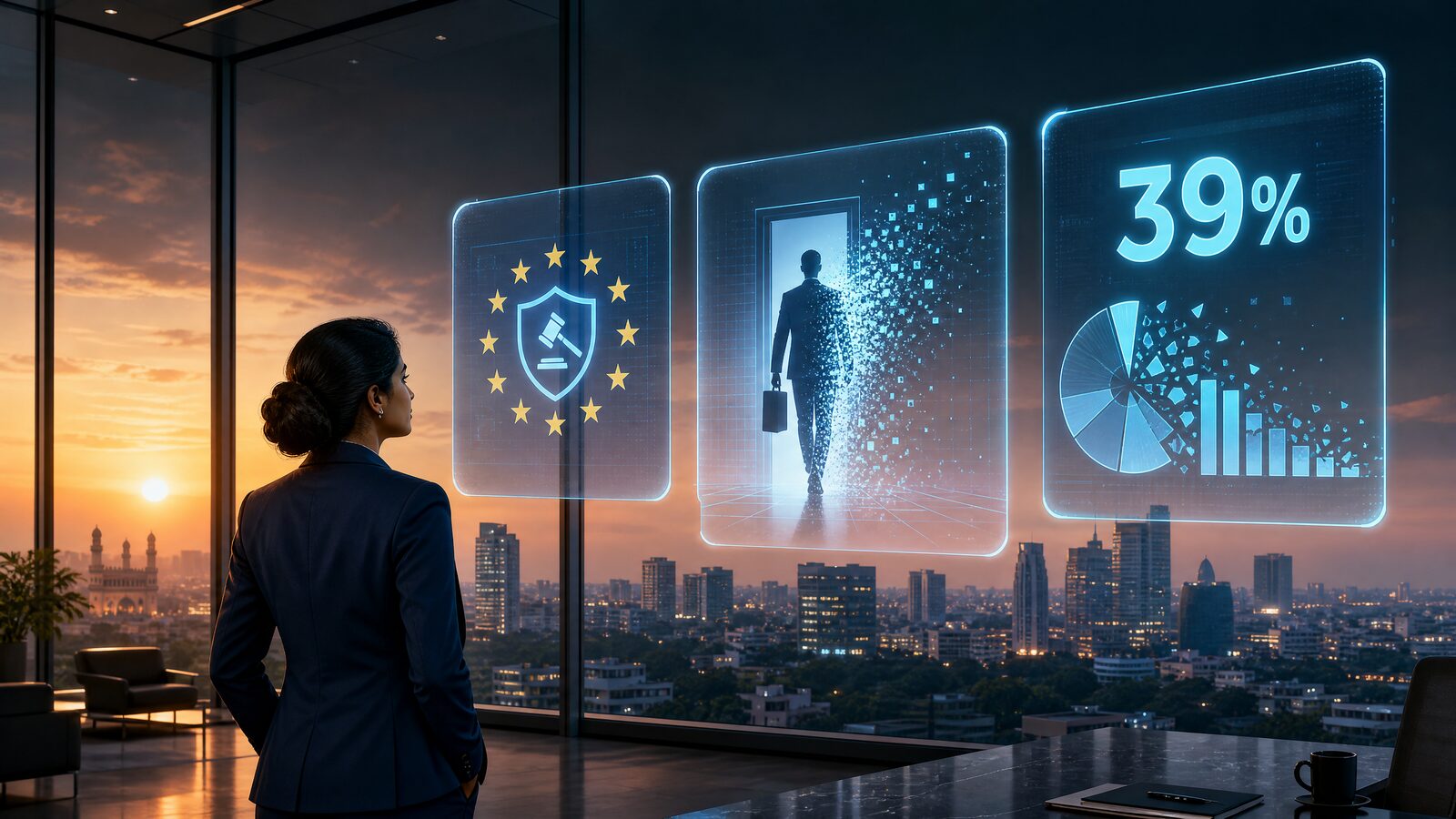
Meet Priya. She runs people operations for a 12,000-person global capability centre in Hyderabad. On one Monday morning, she gets three messages that define the next decade of her profession.
The first is from her parent company's compliance office in Europe. Employment AI is now formally classified as high-risk under Annex III of the EU AI Act.1 The letter does not ask for her policy binder. It asks her to prove that every AI-assisted people decision at the GCC complies, decision by decision, under both European law and India's Digital Personal Data Protection Rules 2025 at once.2
The second is a resignation. Rohan, a payments architect of fifteen years, is leaving in thirty days. Everything he knows about the migration that keeps the lights on is about to walk out of the building.
The third is from the board. The World Economic Forum says 39 percent of existing skill sets will be transformed or outdated between 2025 and 2030.3 Which of ours? What do our people actually know how to do, today?
Here is the uncomfortable truth. Her HR stack answers all three questions the same way: with documents. A compliance folder. An exit interview. A skills matrix from last year's appraisal cycle. Documents are claims. None of them is evidence.
Claims Are Not Capability
Dr Muhammad Kamran calls the answer skills intelligence: a living system that continuously maps, measures, and forecasts the skills an organization has and the skills it will need.4 He outlines a clear SKILL framework to see, update, forecast, deploy, and lift capabilities. He is right about the destination. The interesting question is what it takes to build it honestly.
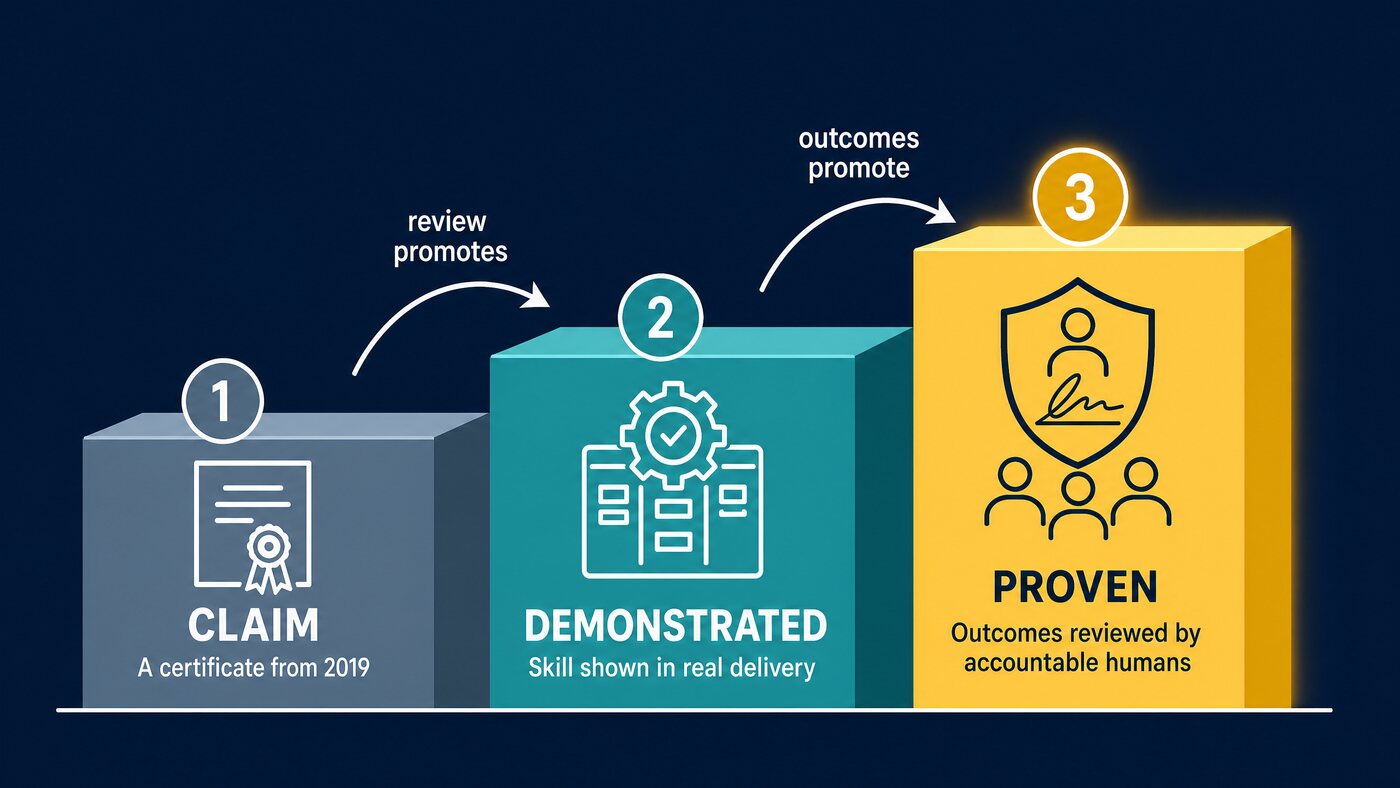
A certification from 2019 is a claim. A skill demonstrated in a real delivery last quarter is something more. A capability proven by outcomes, reviewed by people accountable for the domain, is something an institution can bet on.
Those are three different levels of confidence, and a system that treats them identically will lie to you at scale. This is exactly how AdiOS treats knowledge. Every fact in the institutional brain carries a confidence tier: a claim enters at a personal floor, review promotes it to domain grade, outcomes promote it to enterprise grade with named human approvers. Point that same promotion algebra at the workforce and you get skills intelligence with an audit trail. Capability over credentials stops being a slogan and becomes an algebra.
Proof at Machine Speed
Priya's compliance letter is the second half of the story. An AI system touching people data makes thousands of decisions before any quarterly review convenes. Governance that lives in a PDF governs nothing at that speed.
Consider the complexity facing India's GCC ecosystem.
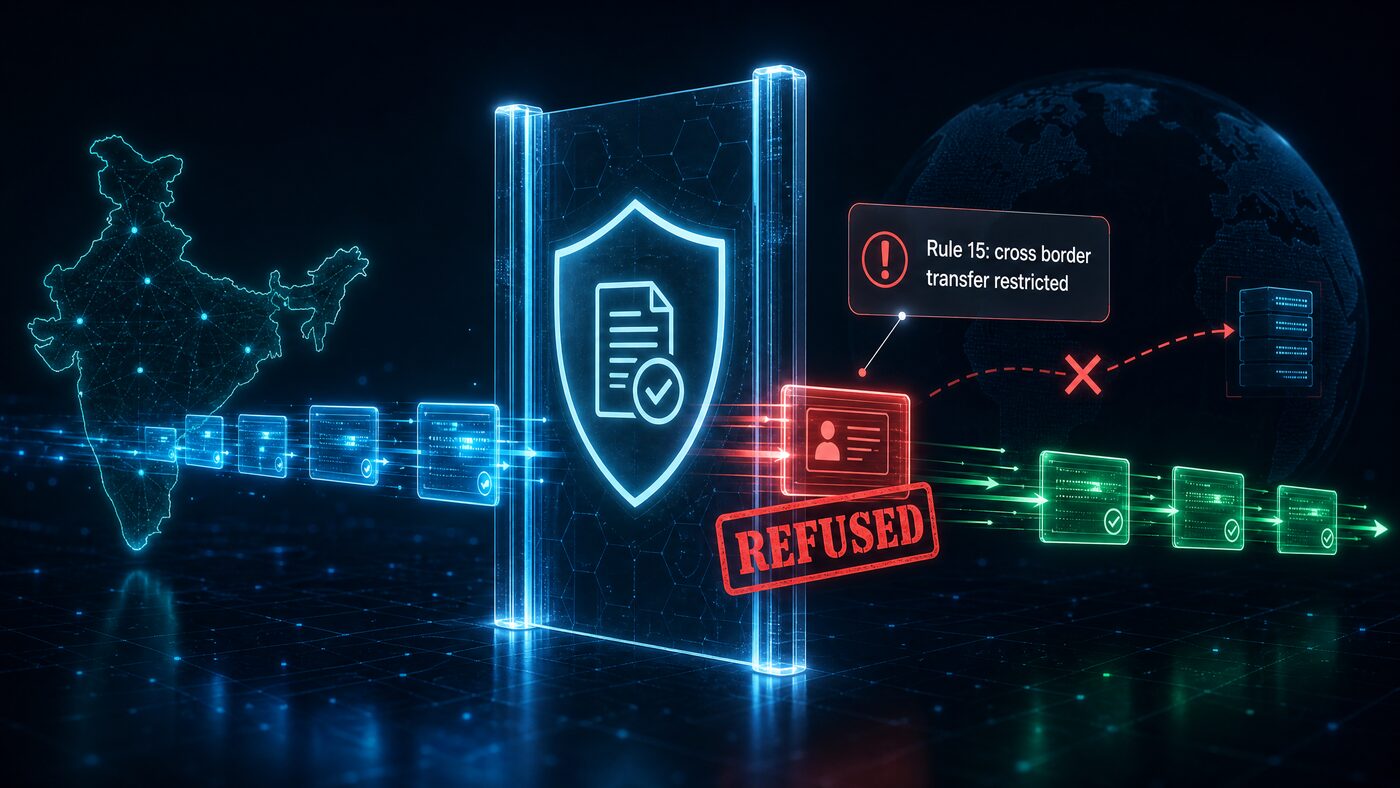
On a sovereign operating system, the policy check happens before the decision executes. In our platform demo, an analytics payload carrying an employee's Aadhaar and PAN toward a foreign endpoint is refused live, with the exact Rule 15 data-transfer restriction named in the verdict, and the evidence recorded at the moment of refusal.2 Nobody reconstructed anything for an auditor six months later. That is the difference between compliance you document and compliance you can prove.
The Leaver, and What Stays
And Rohan? On a system where work continuously teaches the institutional brain, his fifteen years did not live only in his head.

The facts his work generated are confidence-tagged, provenance-tagged, and promoted on outcomes. They do not resign. His successor inherits a brain, not a folder. Intelligence compounds inside the institution that generates it. Attrition stops being memory loss.
The Workforce of Two Species
One more thing is already true inside our own company, and it is coming for every HR function: half of tomorrow's workforce is not human.
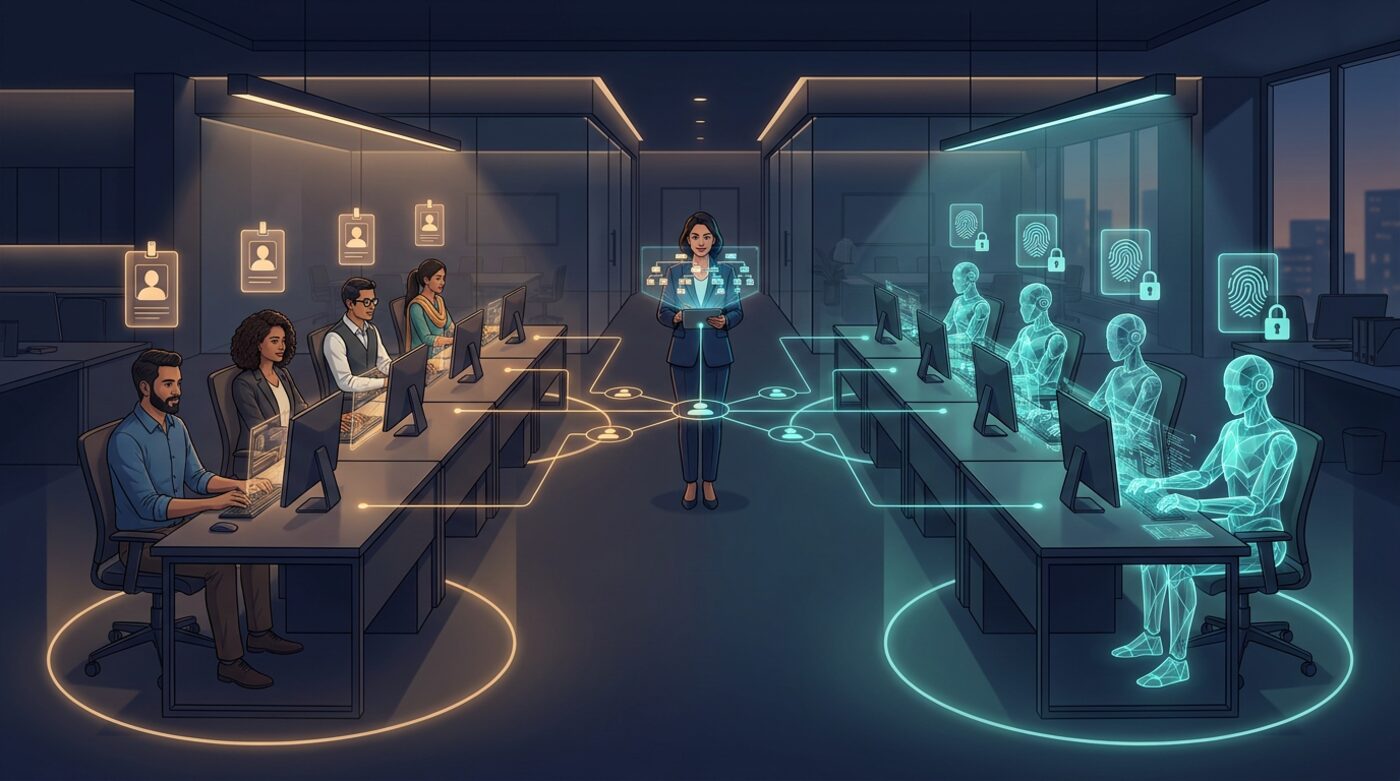
AI agents need onboarding, scoped permissions, performance signals, and offboarding. Ours have cryptographic identities, sealed boundaries, attributed decisions, and a hard boundary listing what they may never own. That is HR work. No HR suite on the market has machinery for it. An operating system does.
The Point
The skills economy is real. Kamran's model names the disciplines well: see your skills, keep them current, infer what is coming, link people to work, lift capability.4 Our claim is narrower and harder: those disciplines need an operating layer where capability is verified like knowledge, where policy is enforced where decisions execute, and where what your people learn never leaves the institution.
HR is becoming the steward of institutional intelligence. It deserves a brain, not a bigger filing cabinet.
Verify capability like knowledge. Enforce policy where decisions execute. Keep what your people learn inside the institution that generated it.
AdiOS. The Circular Operating System.
References
- European Union. Annex III: High-Risk AI Systems Referred to in Article 6(2), EU AI Act.
- Ministry of Electronics and Information Technology. Digital Personal Data Protection Rules 2025, Rule 15.
- World Economic Forum. The Future of Jobs Report 2025, January 2025.
- Dr Muhammad Kamran. The Skills Economy: Why Skills Intelligence Will Replace Traditional Workforce Planning, LinkedIn, July 2026.
- Press Information Bureau. From Policy to Prosperity: GCCs Leading India's Growth Journey, December 2025.
AdiOS Platform Private Limited, Hyderabad. External figures (EU AI Act, DPDP Rules 2025, WEF, PIB) attributed above; the DPDP refusal is reproduced live in the AdiOS platform demo.